
The New Business Playbook: Top High-Growth Trends and Sectors to Watch
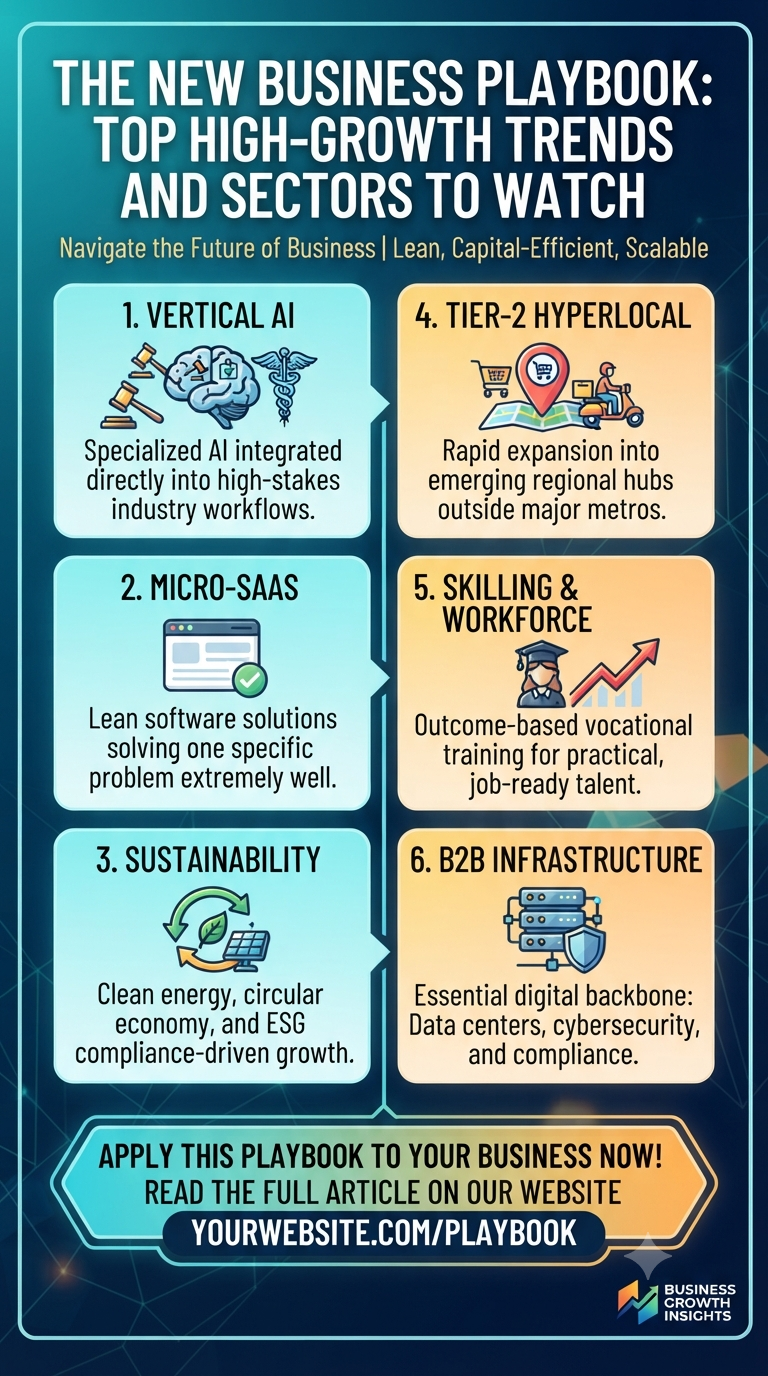
The rules of building a successful company have fundamentally changed. A few years ago, rapid expansion often meant raising heavy capital, launching broad generalist platforms, and spending aggressively to acquire users at any cost. Today, market momentum belongs to lean, capital-efficient businesses that solve specific, high-friction problems.
Whether you are launching a new venture, pivoting an existing business model, or evaluating where to deploy capital, understanding where real demand is moving is critical. Here is the new playbook of high-growth trends and sectors defining the business landscape.
1. Vertical AI and Embedded Workflow Automation
The novelty phase of generic chatbots has passed. Businesses are no longer impressed by standalone AI tools that require complex manual prompting; instead, they are paying for Vertical AI—intelligence built directly into industry-specific workflows.
Where the Growth Is: Software that automates specialized, high-stakes tasks—such as legal contract review, automated tax and GST notice drafting, healthcare diagnostics support, or autonomous supply chain management.
Why It Works: Vertical AI companies deliver immediate, measurable ROI by reducing manual errors and saving hours of expert labor, leading to sticky recurring revenue and higher client retention.
2. Micro-SaaS and Asset-Light Software
Enterprise software has become notoriously bloated, expensive, and difficult to implement. This has created a massive opening for Micro-SaaS—focused, lean software solutions built by small teams to solve one specific problem exceptionally well.
Where the Growth Is: Niche tools tailored for underserved segments, such as automated invoicing for independent consultants, review-management tools for local clinics, or compliance trackers for boutique agencies.
Why It Works: With low infrastructure costs, minimal overhead, and global digital distribution, lean software models reach profitability far faster than traditional tech startups.
3. Clean Energy, Circular Economy, and Compliance-Driven Sustainability
Sustainability has evolved from a corporate branding exercise into a core economic and regulatory driver. Tightening environmental regulations, rising energy costs, and shifting consumer expectations are fueling rapid expansion across green infrastructure.
Where the Growth Is: Domestic solar component manufacturing, EV charging and battery recycling networks, biodegradable packaging, and ESG (Environmental, Social, and Governance) reporting tools for mid-sized enterprises.
Why It Works: Both institutional buyers and everyday consumers actively favor supply chains that reduce waste, lower carbon footprints, and meet strict compliance standards.
4. Hyperlocal Commerce and Tier-2/Tier-3 Market Expansion
While major metropolitan markets are heavily saturated, the next wave of consumer and B2B growth is unfolding in emerging regional hubs and Tier-2/Tier-3 cities. Rising disposable incomes, deep digital payment adoption, and improved logistics have unlocked massive demand outside traditional business capitals.
Where the Growth Is: Regional quick-commerce dark stores, localized fintech and credit-access platforms, healthcare diagnostics chains, and vernacular digital services tailored to regional languages.
Why It Works: Customer acquisition costs are significantly lower outside metro areas, brand loyalty is stronger, and unit economics often turn positive much faster.
5. Outcome-Based Skilling and Workforce Transformation
As automation reshapes traditional job roles, both individuals and corporations are shifting away from generic degrees toward skills-based hiring and practical upskilling.
Where the Growth Is: Job-linked bootcamps, specialized corporate training in AI literacy and data analytics, and vocational certification platforms that bridge the gap between academic theory and real-world execution.
Why It Works: Businesses urgently need talent that can operate modern digital tools from Day 1, making outcome-driven training models essential B2B and B2C investments.
6. Digital Infrastructure, Data Centers, and B2B Back-End Services
Behind every consumer app, cloud platform, and AI model lies heavy physical and digital infrastructure. As data consumption surges and digital governance tightens, B2B infrastructure providers are experiencing sustained institutional demand.
Where the Growth Is: Data center capacity expansion, cybersecurity auditing, embedded finance APIs, and specialized regulatory compliance consulting.
Why It Works: Enterprises rarely switch infrastructure or compliance partners once integrated, creating durable, long-term B2B contracts.
How to Apply This Playbook to Your Business
You do not need to overhaul your entire company to capitalize on these shifts. Start by asking three strategic questions:
1. Where is the manual friction? Identify repetitive operational bottlenecks in your industry that can be streamlined through targeted automation.
2. Are you too broad? Narrow your positioning to dominate a specific niche, industry vertical, or underserved geographic market before expanding outward.
3. Is your foundation scalable? Ensure your financial controls, legal compliance, and standard operating procedures are built to handle growth without breaking.
The businesses winning in this cycle are not the loudest or the biggest—they are the sharpest, fastest to adapt, and most disciplined in their execution.
Visit our gmb profile to know more:
Xlrate Corporate Consultancy LLP-Company Secretary and Credit repair Consultants https://share.google/izJfTlh32Y7hULwP8
Have Questions? We're Here to Help
Get expert advice from XLRATE CORPORATE CONSULTANCY LLP. Reach out to discuss your requirements.